
Helping women over 40 reclaim their health & age strong
Coming to the US 33 years ago
Thirty-three years ago, my husband and I moved to the US so he could begin his doctoral studies at the University of Iowa. We had a five-month-old with us.
The weeks before we left were exhausting — moving between his parents' home and mine, saying goodbye, packing a life into suitcases, all with an infant who didn't sleep through the night. By the time we boarded, we were already running on empty. The airline didn't have a bassinet for us, so we held our son for the entire flight, trading off, praying neither of us would doze off and lose our grip on him. The first month in the US, my husband and I took turns getting sick from sheer exhaustion.
But God provided.
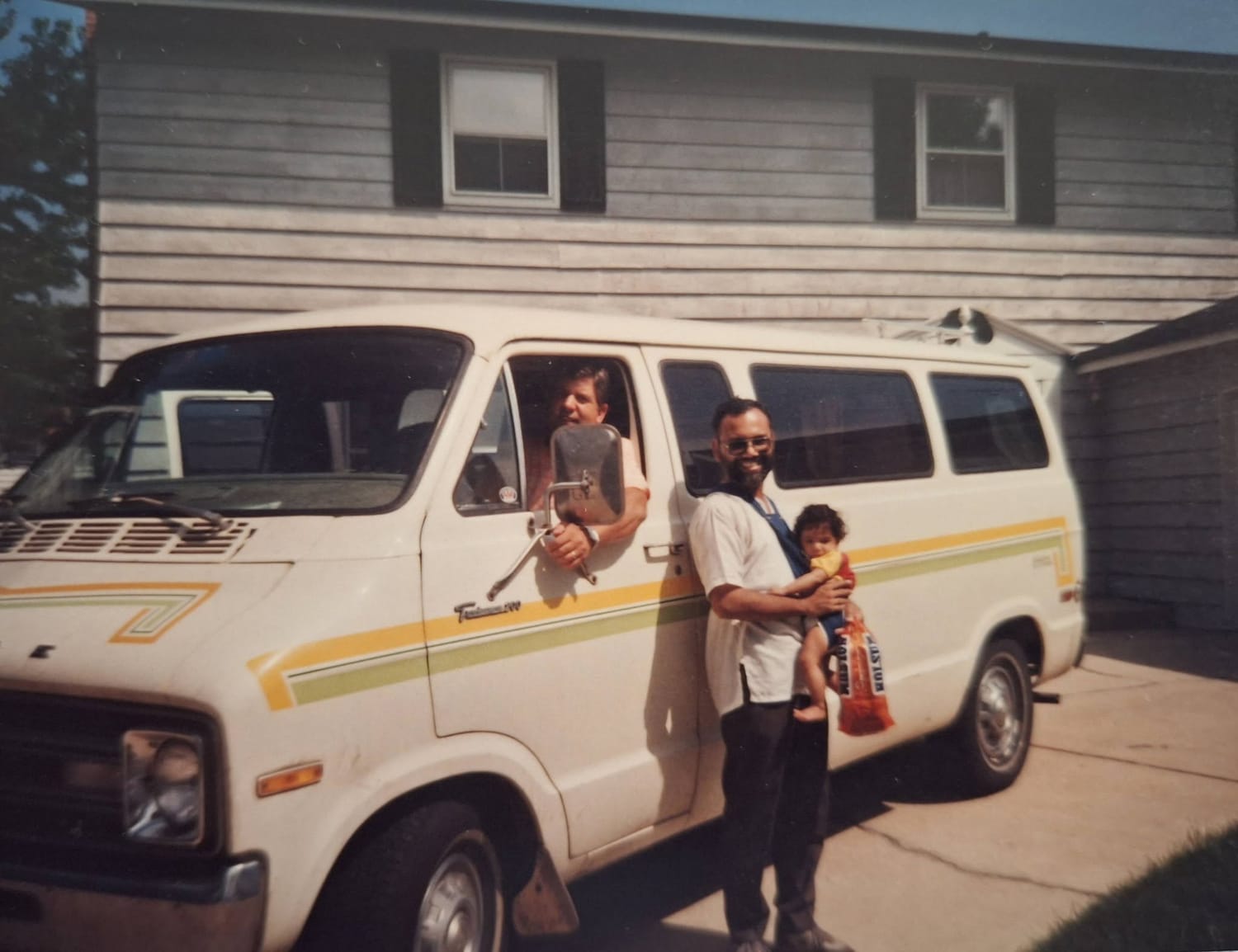
Jim picking us from Chicago
We landed in Chicago and spent a few days with friends before another friend drove us to Iowa City in his van. He and his wife had been my husband's host family a few years earlier, when he first came as a master's student — and they were a huge support in those early months.
So did the pastor of the campus ministry my husband had known back then. His wife, Nancy, took me grocery shopping every Saturday, teaching me how to read a sale paper and clip coupons.
The wife of another Professor was a steady presence in those early months, patiently walking me through the everyday things I didn't yet know how to navigate on my own.
Between the two of them, I had endlessly patient teachers for a life I was still learning how to live. The apartment we rented belonged to an elderly couple who only rented to international graduate students — they were generous with us from the start, especially once they saw we had a baby.
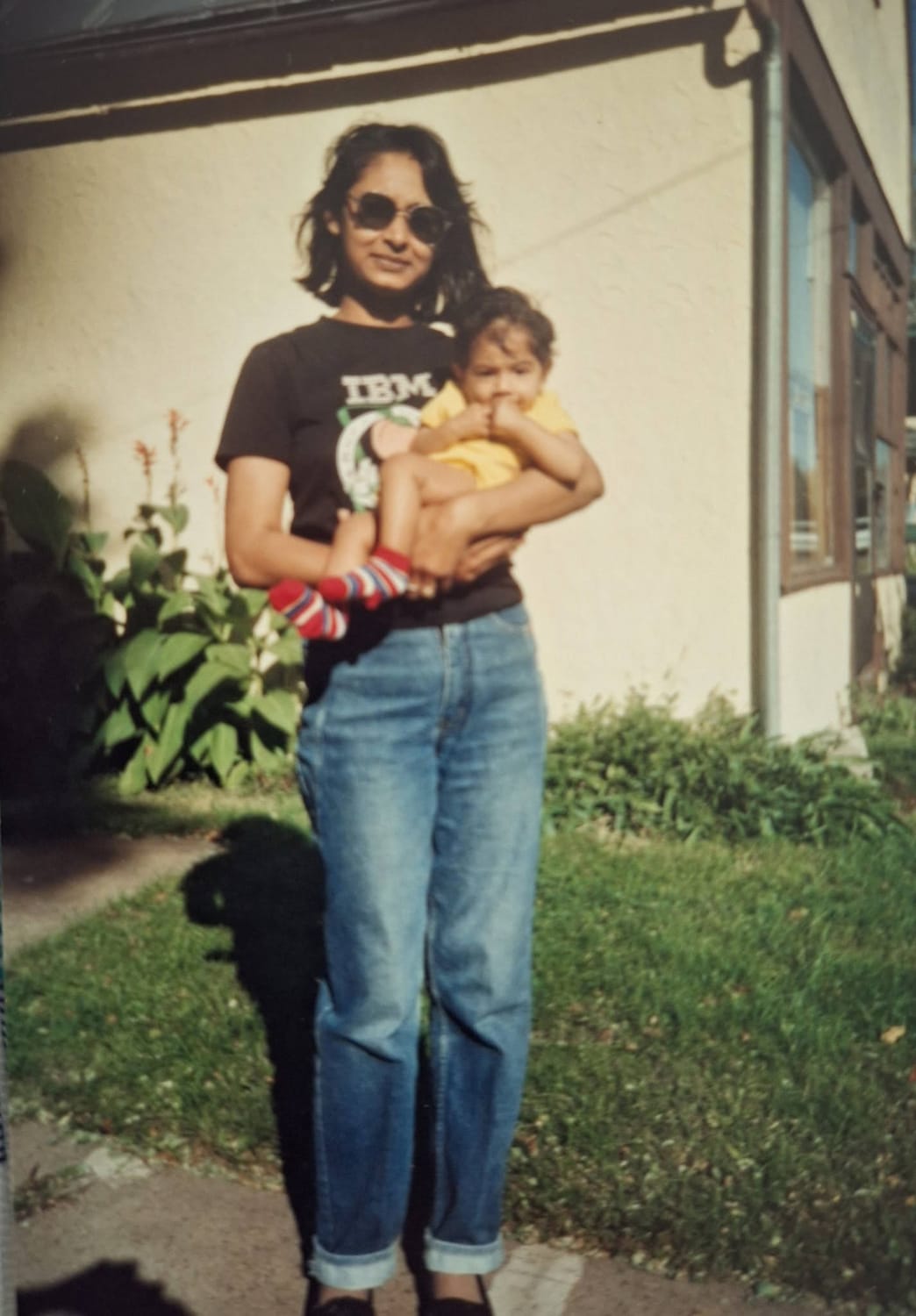
Me with Amaal outside our Iowa City Apartment
I needed a part-time job, and the only one I could find that worked around my husband's class schedule — so our son never had to go to daycare — was in food service at the university hospital cafeteria. I had a master's degree and a teaching certification. I would have chosen an office job if one had been available to me. But I took the cafeteria job, and I'm glad I did — not for the reason I expected.
The hospital ran a dietetics program, and the students published a weekly nutrition newsletter. I devoured every issue. This was the early-to-mid '90s — nutrition science was still new territory for me, and I couldn't get enough of it. Around the same time, I went in for a free cholesterol screening and was startled to learn that mine, in my late 20s, had already crept up. My husband and I had been eating ice cream by the bowlful because it was so cheap — cutting back on that alone made a difference. I didn't know it yet, but that cafeteria job and those newsletters were where this all started. By my last year in Iowa, I'd moved from the cafeteria to working as a unit clerk in the hospital's NICU and intermediate nurseries — closer to the clinical world, even if I still didn't know where it was leading.
That first Iowa winter was brutal. I usually walked to catch the campus bus, and one day my husband suggested I bring a Walkman to make the walk more bearable. Bundled in two hats, a scarf, and a heavy coat, I could barely hear anything — and as I crossed a busy intersection, the radio announcer said it was 34 degrees below zero. I never wore that Walkman again; I couldn't risk not hearing traffic. Eventually I gave in and started taking the city bus instead, fifty cents a ride, because I simply couldn't face that walk anymore.
Money was tight — we were below the poverty line that year. We shopped at Aldi and a Mennonite thrift store called Crowded Closet for our son's clothes, and WIC checks from the community health center helped stretch what we had. When I shared with a friend that I was amazed that the US offered this kind of support, she joked that we'd more than make up for it later in taxes. She was right — we have, many times over.
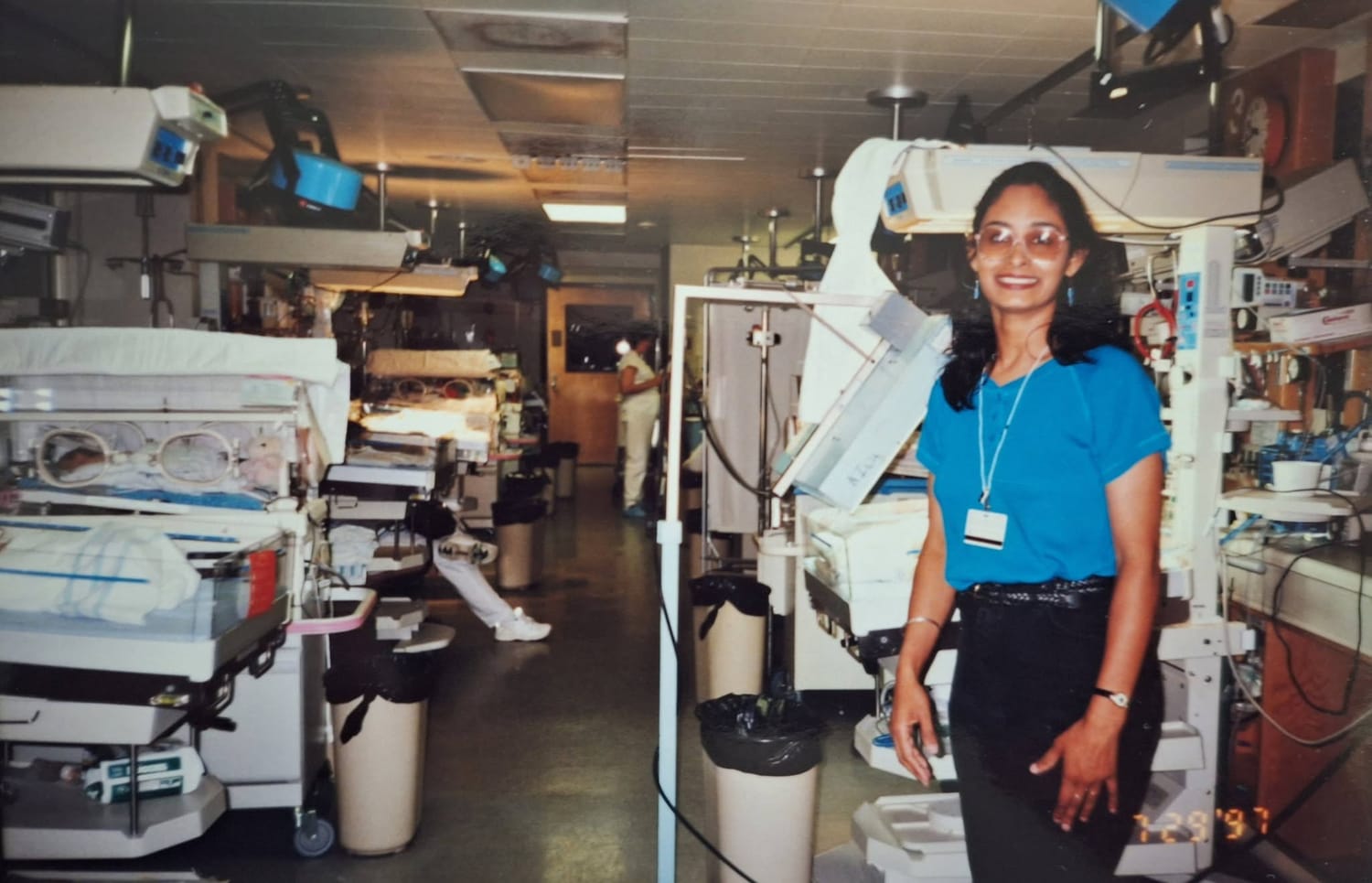
At the University of Iowa Hospitals & Clinics Intermediate Nursery/NICU
That season in Iowa — cold, sparse, and full of people who showed up for us — is where this all began, even though I couldn't have told you that at the time. The curiosity I found in those hospital newsletters never left. It just took another fifteen years, a master's in exercise science, and a few more cities before I understood what it had been pointing toward.
Now, coaching women through their own seasons of not yet knowing what's on the other side, I think back to that winter often.
Provision doesn't always look like what you expect.
Sometimes it looks like a stranger's van, a Saturday grocery trip, or a newsletter you can't stop reading.


